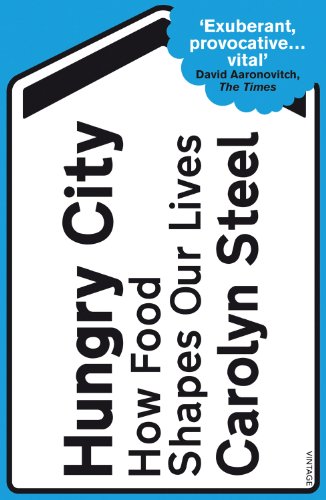
Hungry City: How Food Shapes Our Lives by Carolyn Steel

This original and revolutionary study examines the way in which modern food production has damaged the balance of human existence, and reveals a centuries-old dilemma that holds the key to a host of current problems, among them obesity, the inexorable rise of the supermarkets, and the destruction of the natural world.

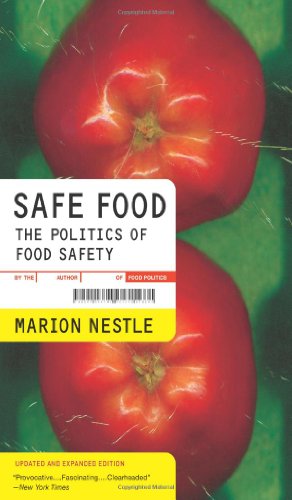
Safe Food: The Politics of Food Safety by Marion Nestle

Marion Nestle, author of the critically acclaimed Food Politics, argues that ensuring safe food involves more than washing hands or cooking food to higher temperatures. It involves politics. When it comes to food safety, billions of dollars are at stake, and industry, government, and consumers collide over issues of values, economics, and political power—and not always in the public interest.

French Beans and Food Scares – Culture and Commerce in an Anxious Age by Susanne Freidberg

French Beans and Food Scares explores the cultural economies of two “non-traditional” commodity trades between Africa and Europe–one anglophone, the other francophone–in order to show not only why they differ but also how both have felt the fall-out of the wealthy world’s food scares. In a voyage that begins in the mid-19th century and ends in the early 21st, passing by way of Paris, London, Burkina Faso and Zambia, Freidberg illuminates the daily work of exporters, importers and other invisible intermediaries in the global fresh food economy.

A Revolution In Eating – How the Quest for Food Shaped America by James E. McWilliams

In A Revolution in Eating, James E. McWilliams presents a colorful and spirited tour of culinary attitudes, tastes, and techniques throughout colonial America.Confronted by strange new animals, plants, and landscapes, settlers in the colonies and West Indies found new ways to produce food. Integrating their British and European tastes with the demands and bounty of the rugged American environment, early Americans developed a range of regional cuisines.

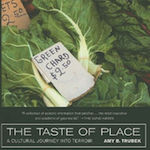
The Taste of Place – A Cultural Journey Into Terroir by Amy Trubek

How and why do we think about food, taste it, and cook it? While much has been written about the concept of terroir as it relates to wine, in this vibrant personal book, Amy Trubek, a pioneering voice in the new culinary revolution, expands the concept of terroir beyond wine and into cuisine and culture more broadly.

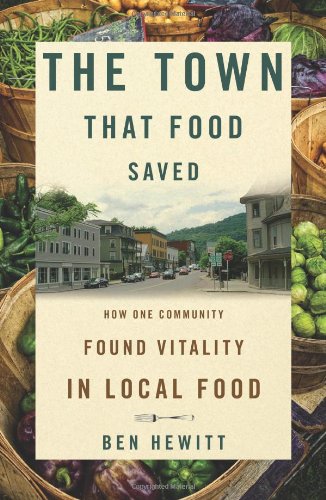
The Town That Food Saved by Ben Hewitt

A microscopic burg in northern Vermont may just be the epicenter of a new food movement, a scenario that alternately amuses, enthuses, and enrages its 3,200 residents. With a hardscrabble reputation left over from its heyday as a mining metropolis, Hardwick has had to rely on a can-do/can-do-without stoicism before, though the current economic downturn is certainly testing its mettle.

American Wasteland by Jonathan Bloom

American Wasteland examines where and why we waste nearly half of our food, while offering suggestions on what we can do better. In the book, Bloom discuss why food waste really does matter and chronicle why it occurs from the farm to fork.