How Technology Will Decentralize the Global Food System

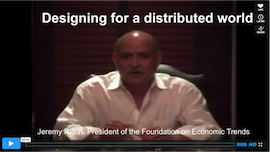
Peer-to-peer sharing, traceability and enterprise software are just a few of the ways technology is catalyzing a flexible, resilient and sustainable food system. With food tech as a catalyst, the possibility of an interconnected web of localized food systems within a bigger global food system seems possible. Speaking from the Summit, Jeremy Rifkin, President of the Foundation on Economic Trends discusses the shift from point source to distributed thinking and implications for our food systems.

Atina Diffley Asks the Right Questions

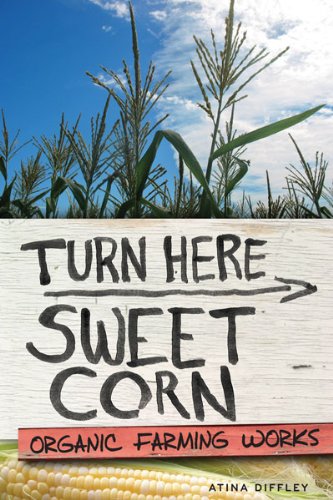
Atina Diffley, author of Turn Here Sweet Corn, discusses the criteria we need to consider when we design food and farming systems. Let’s make sure we’re asking the right questions! Listen to the Minnesota Public Radio interview with Atina here.

Top food and nutrition experts call on Congress to invest in healthy food

The Environmental Working Group and authors Anna Lappé and Dan Imhoff initiated the following letter of frustration with the lack of meaningful reforms and public input into the legislative process by the Senate Agriculture Committee as it drafted its 2012 Farm Bill. Read what Mario Batali, Michael Pollan and more than 70 of the nation’s food and health leaders said in urging Congress to cut crop insurance subsidies and redirect that money into vital investments in nutrition, healthy food and conservation programs.

Zen and the Art of Motorcycle Maintenance Meets Farmer Jane

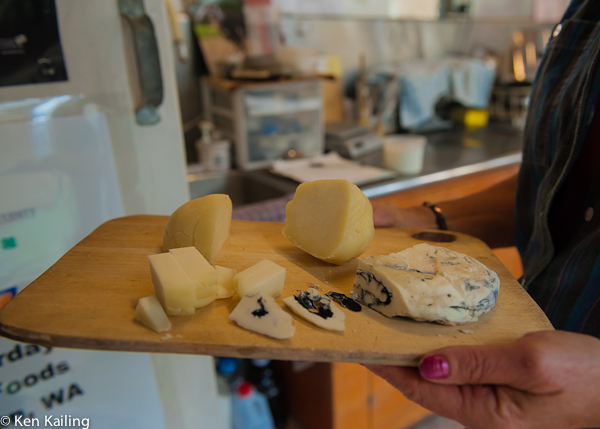
Tucked into a Ponderosa pine woods at an elevation of about 2,300 feet, Pine Stump Farms, Omak Washington, is just 30 miles south of the Canadian border in the central Washington Okanagan Valley. A high-elevation pine/shrub-steppe environment with 12 to 15 inches of annual rainfall means it is necessary for Carey Hunter and Albert Roberts to take a holistic approach to farming and balance a wide range of business activities to succeed.

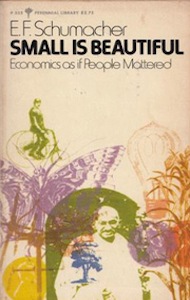
Small is Beautiful by E.F. Schumacher

E.F. Schumacher’s collection of essays, Small is Beautiful, was published in response to the 1973 energy crisis and increasing globalization. His ideas predate today’s environmental destruction and economic collapse by four decades and yet the solutions he offers are both practical and practicable.

PCC Natural Markets – Co-ops in the 21st Century

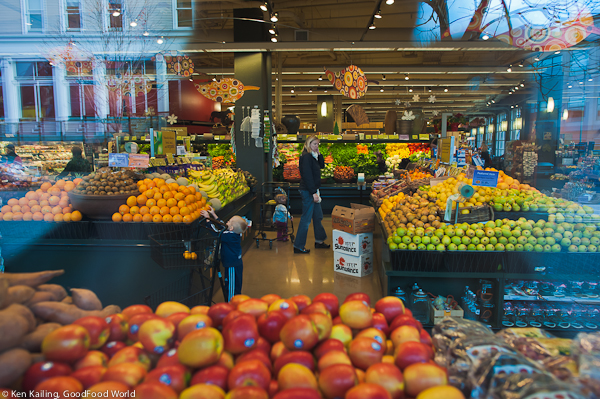
Walk into any of the nine PCC Natural Markets in Puget Sound and it’s clear your not in your parents’ (or grandparents, if you’re young enough) food co-op! No more cozy slightly run-down food markets with barrels of flour and bags of rice on the floor, around which barefoot children played tag while their parents debated politics and planned social actions against “the establishment.” Today, the PCC (as it’s fondly referred to here in Seattle) is every bit the contemporary supermarket. So what is so special about the nation’s largest natural food co-operative?

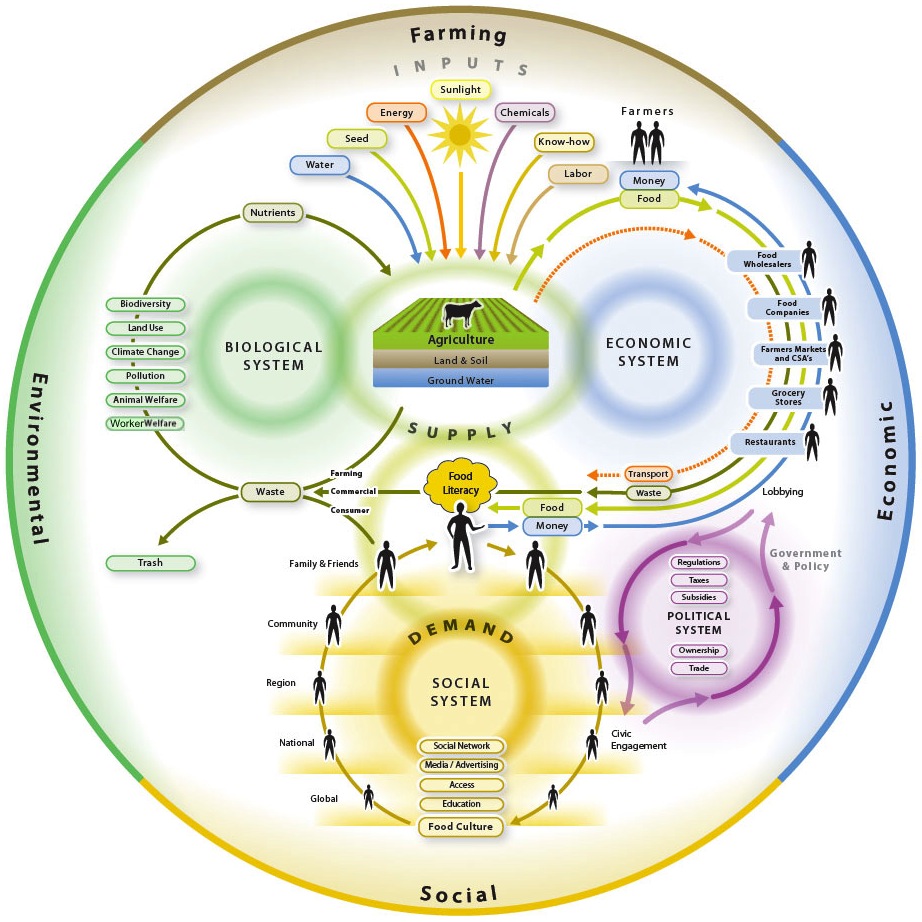
Mapping Our Food System – Circles Within Circles

Today’s food system is made up of four interconnected components: agriculture, the economy the social/political system, and the environment. As inputs, outputs, products, and labor move through these networks, each is intimately linked and influenced by the other.